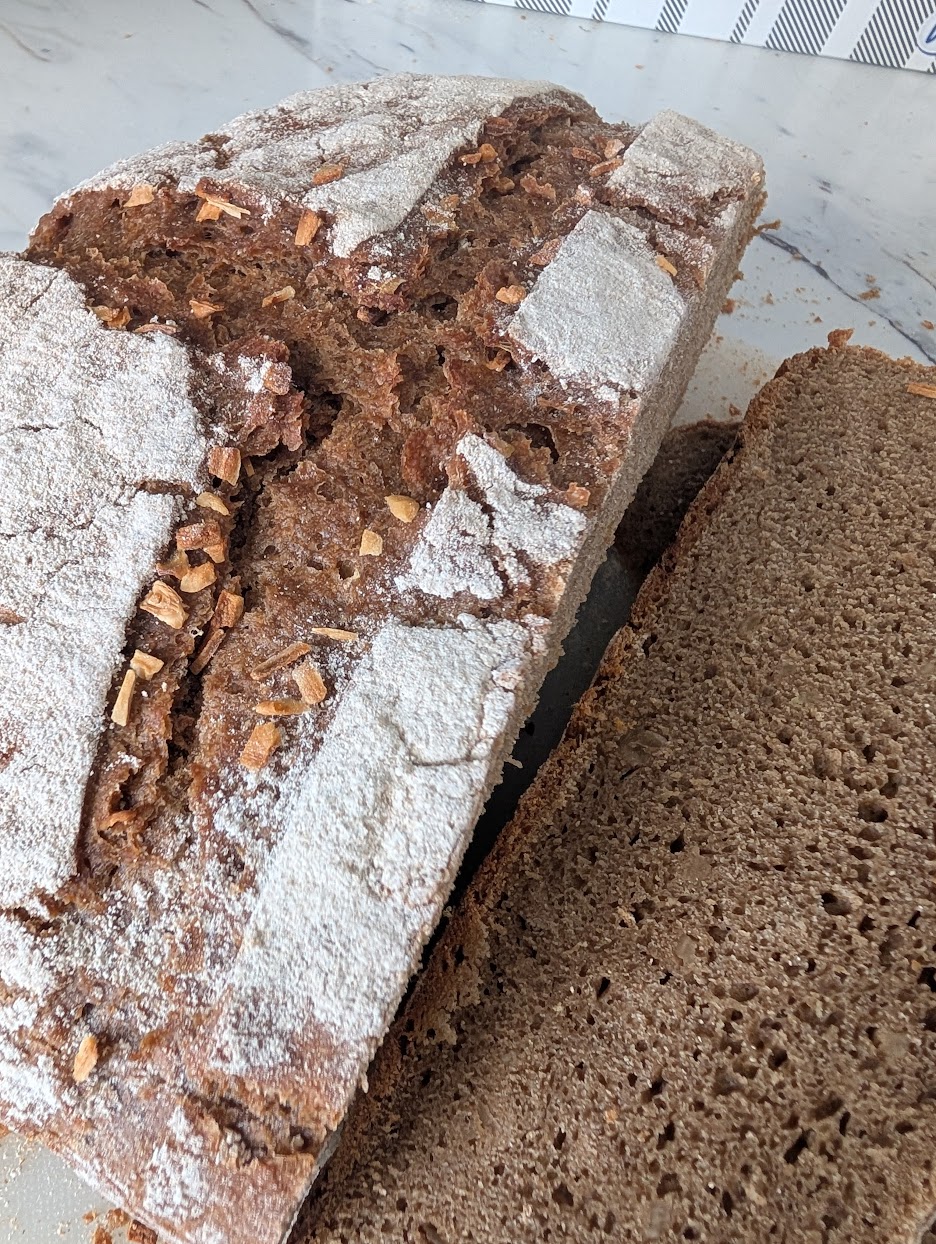
This artisan rye is made mostly with whole-grain rye flour for an extraordinary malty and flavorful loaf of bread. Perfect for open-faced sandwiches or smothered with spinach dip, it’ll be an instant favorite and a new staple in your baking rotation.
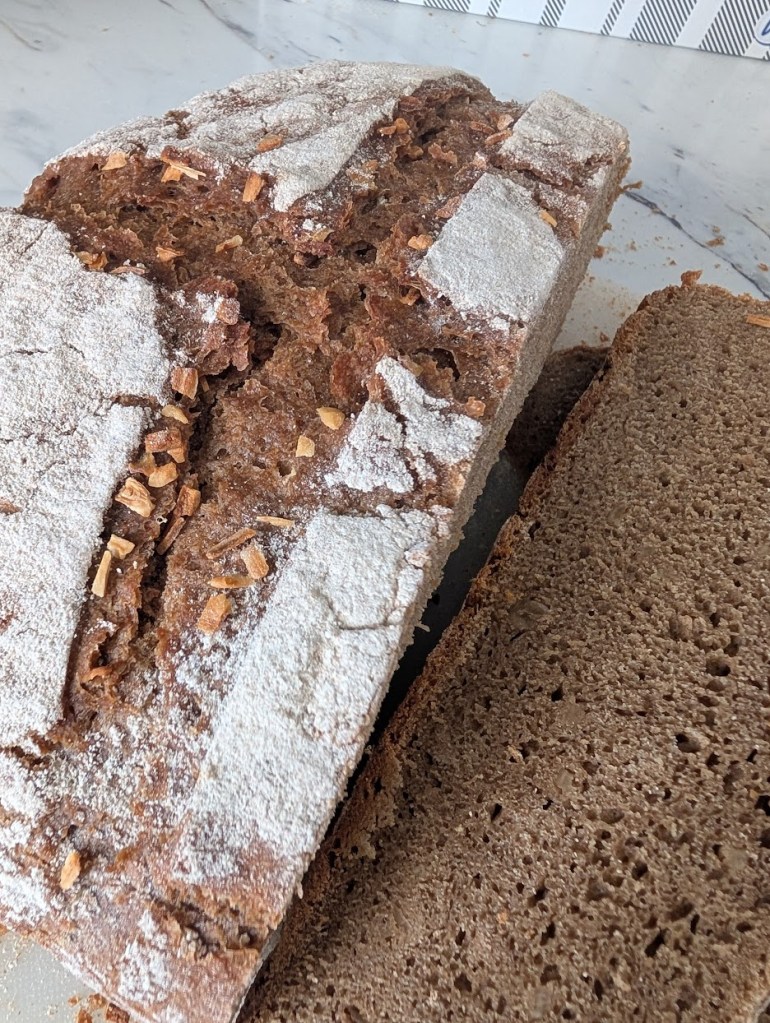
A good New York deli rye will always be my favorite bread. It makes for the best sandwiches with fresh garden tomatoes, it’s a great vehicle for spinach dip, and it is the best buttered toast to go alongside eggs and chipped beef.
Naturally, I wanted to create a gut healthy sourdough rye that resembled that amazing New York deli rye of my childhood. This wholegrain sourdough rye bread boasts that hearty rye flavor with a crunchy crust and an onion accent that will keep you going back for more.
How is rye flour different than wheat flours?
If you are new to using rye flour, here are a few tidbits of information on using it to make rye sourdough bread.
- Breads baked with rye flour will be a bit more dense than bread made with whole wheat flour, so we add 10% of a high protein flour like bread flour or all purpose flour to lighten the loaf a bit.
- Sourdough bread made with rye will ferment faster because micronutrients in rye flour encourage fermentation.
- You need to use a preferment (levain) because sourdough rye bread has a high acidity and low PH.
Rye dough will feel very wet and much stickier compared to working with high gluten flours (all purpose and bread flours). This is normal, and you shouldn’t worry!– Wet your hands before mixing to avoid the dough sticking to your hands. Knowing this before making this recipe is important.
What is rye?
Rye flour is milled from rye berries just as wheat is milled from wheat berries. It has a nutty, earthy and malty flavor and is categorized by how much of the rye kernel is in the ground flour (endosperm, bran and germ). Pumpernickel is actually the darkest type of rye flour and contains all of the ground up rye berry.
Is Rye healthy?
Yes! Rye naturally has less gluten than wheat, and the fermentation breaks down the gluten even more, so for those with gluten sensitivities, rye is a great choice. Rye has a higher nutrition profile than wheat, and has more soluble fiber.
Baker’s Timeline
| 7:00 pm | Make the levain |
| 7:00 am (the next morning) | Mix and bulk ferment |
| 7:30 am | Shape and proof |
| 8:30 am | Bake |
Do I need the levain?
The levain, also known as preferment, is definitely going to help this recipe to be the best it can be. If you skip the preferment, then you might get a gummy layer between your crust and crumb. You need the levain to be ripe in order to properly acidify the rye in order to avoid a gummy bread. The levain also will deepen the flavor creating a better flavor profile.
Ingredients:
Levain
- 270g whole rye flour
- 270g water
- 40g active sourdough starter at 100% hydration
Dough
- 270g whole rye flour
- 60g bread flour or all purpose flour
- 270g water
- 12g fine sea salt
- 1 tbsp black strap molasses
- 2 tbsp dried onion flakes
- the levain
Instructions
- Prepare the levain – 7:00 p.m.
Mix the Levain ingredients in a medium bowl and leave them covered with a lid or plastic wrap at a warm room temperature, 72-76°F, to ferment overnight. - Mix – 7:00 a.m. (the next morning)
Use warm mixing water (80-85°F). Place the flour, water, salt, molasses, onion flakes and levain in a large bowl. We your hands as the dough is very sticky, or use a dough whisk, mix thoroughly. Shape the dough into a ball in the center of the mixing bowl. - Bulk fermentation – 7:15 a.m.
At a warmish room temperature, 72-76°F, bulk fermentation should take 20-45 minutes.Cooler temperatures may take longer. The dough should rise about 25%. - Shape – (after bulk ferment)
Prepare a banneton basket with a tea towel and generously dust with rye flour (this dough is very sticky!). Scrape the dough out onto a well floured work surface. Now you will perform one set of stretch and folds (light on the stretch). To do this, imagine there are 4 sides to the dough, fold one side of the dough over to about the middle. Then fold each side over to the middle until you have a square shape. Now flip the dough over and use your hands to shape it into a ball again. Scoop up the dough and place it seam-side-down into the prepared proofing basket. Dust the top of the dough with more whole rye flour. Cover the basket with plastic wrap, beeswax or place into a plastic shopping bag to proof for an hour or so. - Proof – (1-2 hours)
At room temperature, this rye sourdough bread should take 1 hour to proof (in the colder months or if your kitchen is cool, it may take 2 hours). - Bake
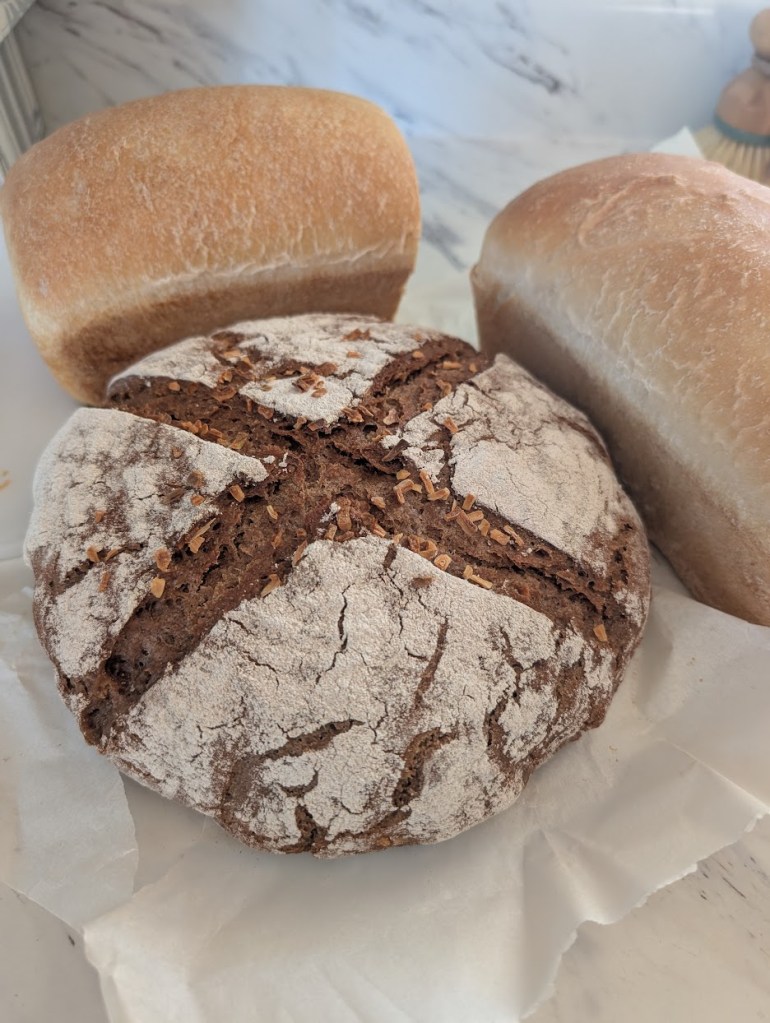
Preheat a Dutch oven at 450°. Once preheated, place a piece of parchment paper on top of the dough and flip it over seam side down. You can score the dough if you like, or allow it to naturally crack for a more rustic look. Top with more onion flakes if desired, and place into the preheated Dutch oven with the lid on. Bake for 30 minutes, then remove the lid and lower the temperature to 400°. Bake without the lid for an additional 20-25 minutes. You will know it is done when the crust is a deep golden brown and a knock to the bottom sounds hollow. Let the bread cool on a wire rack for an hour or longer, until completely cool. Place in a plastic or paper bag for and wait 24 hours before slicing (we have never once been able to wait the full 24 hours!)
Since sourdough is naturally fermented, the bread will last a bit longer than other breads that don’t use preservatives. To get the most out of your sourdough rye bread, store in an airtight container and it will last for 4 days. You can also freeze for up to 3 months.
FAQ
Why is my sourdough rye bread gummy?
You probably cut the bread too early or did not allow the levain to ripen for enough time. Make sure you allow 12 hours for the levain to ripen and after baking the bread should be fully cooled, preferably for 24 hours.
Do I need a Dutch Oven?
No, not necessarily. You can use a pizza pan and “steam” the bread during the initial 30 minute bake by spraying with a spray bottle filled with water. You could also use a loaf pan or other oven-proof vessel.
Why is the crust separating from the bread?
If your top crust or “flying crust” is separating from the rest of your loaf, then your dough was either too hydrated or your levain was not ripe enough. Be sure to allow 12 hours in a warm room to fully ripen.
Is rye sourdough good for gluten intolerance?
Although rye sourdough is naturally low in gluten, and the fermentation process breaks down even more gluten, it is not gluten free. It is better than typical breads for gluten intolerance.



 Raising Recipes
Leave a comment